
What Is the Last Supper Memorial?
| Languages |
English , Español, Français, Deutsch, Русский, עִברִית, عربي, हिंदी, 中文, 日本語 |
|---|---|
-
-
 Torah Scroll
 -
Mat. 22:1-2
-
Mat. 22:1-2
-
Mat. 22:1-2


File:Example.jpg|link=Media:Example.jpg|Opens full size
Short Answer: The evening before the Passover sacrifice, the Messiah gathered His disciples together at the last supper. He then performed the equivalent of a Hebraic wedding betrothal with them, and with all believers, in offering the cup of wine and giving the promise of His return. The communion meal, which is to be eaten often, serves as a constant reminder that He went away to prepare things and that He will return for His bride - all of which are a part of the promised New Covenant.
And as they were eating, Jesus took bread, and blessed it, and brake it, and gave it to the disciples, and said, Take, eat; this is my body. And he took the cup, and gave thanks, and gave it to them, saying, Drink ye all of it; For this is my blood of the new testament, which is shed for many for the remission of sins. But I say unto you, I will not drink henceforth of this fruit of the vine, until that day when I drink it new with you in my Father's kingdom. Matthew 26:26-29 KJV
Many times, the Messiah had challenged His listeners and disciples with eating His flesh and drinking His blood. Initially, they could not understand the symbolism and significance of how this would come to pass - nor could they as they did not realize the necessity of the sacrifice of His life. In using the bread and the wine, He instituted the elements that would act as a reminder of His departure and coming return for thousands of years.
Prophetic Pictures
There are many prophecies and foreshadowings of the Messiah and His work as Savior within Scripture. Some of these point to the communion meal and a wedding betrothal.
The Prophecy in Joseph's Life
The life of Joseph is one large prophetic picture of the two comings of the Messiah. In regards to the Last Supper and the Messiah's death we look at Genesis chapter forty. Joseph is in jail and the wine bearer and the baker have dreams. It is shown that in three days the wine bearer shall be raised up to his position near the pharaoh and the baker shall die by being hanged on a tree. The wine and the bread, being lifted up, and being hanged are all pictured in this short segment which comes shortly before Joseph became as king and was the second most powerful leader in all of Egypt.
Appearance of Bread and Wine
Now how many times do we see bread and wine come together in scripture? Abraham brought bread and wine to the three angelic strangers that visited Him. Joseph had to interpret the dreams of the baker and the cup-bearer. Regarding the Feast of Booths (Sukkot), Elohim says when you have gathered from your threshing floor [bread] and from your wine press [wine] then you shall rejoice for seven days. Time and time again we see the combination of bread and wine.
The Table of Showbread
Another place we see bread and wine come together is in the Tabernacle at the Table of Showbread. This table would have twelve loaves of bread each week. In addition, there would be frankincense, salt and oil as these were needed for the grain offerings. Also, wine was needed for the oblation offering. This shows His sacrificial duties to ensure His people are righteous. It also implies that to be able to commune together and eat this bread, we are to be priests and that He is our Head in His position as High Priest. We are to be set-apart (holy) to consume this bread.
Prophecy in Adam and Eve
Prophecies and foreshadowings of the Messiah begin very early in Scripture. In fact, what might be the first such picture comes before there is even a sinful act and a need for a savior. The Scriptures state that it is not good for man to be alone and then describe how Adam was put into a deep sleep, his side was opened, flesh was taken out, and this was fashioned into his wife. Likewise we can see that Messiah was put to death (like a deep sleep), His side was pierced (opened up), blood and water came out, and the believer is purified and made spotless by His blood which was shed so as to become His bride.
Similarity to a Wedding Betrothal
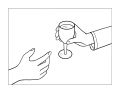
There are many similarities surrounding the Last Supper to a traditional Hebraic wedding betrothal. Typically the father will choose a bride for his son much like our Heavenly Father has chosen the bride for His Son. When the marriage proposal is given, an agreement by the bride is shown by accepting a glass of wine much as the Believer does at the communion meal. When it is publicly declared the bride goes through a period of immersion or cleansing much like the act of baptism. During the betrothal period, the groom goes to prepare a house and does not know the time of his return but must wait until the father states the house is ready. This matches how the Messiah prepares for us our Heavenly home and his return at a time no one but the Father knows. Often, a gift is given to the bride-to-be for which the Believer has received an earnest of the Spirit.
- Mat 22:1-14 Wedding Feast for King's Son
- Mat 25:1-13 Parable of the Ten Virgins
- John 14:1-4, all Going to Prepare a Place
- Eph 5:25-32 Messiah and His Wife / Church
- Rev 19:7 Marriage Feast has Come
- Rev 22:16-17,20 Come!
- Rev 21:3-4 No More Tears
- Rev 22:3-5 Living Together
The Communion Meal
The word 'communion' describes a person who is a participant, partner, or in fellowship. All who are believers in the Messiah are described as being in communion with the Messiah, with one another, and in the promise of eternal life. The evening before the Messiah would fulfill the prophecies of the Passover sacrifice, He gathered together the apostles for one last meal together. During this meal He used a loaf of bread and a cup of wine as a promise of His return. The wine and bread used in the communion meal are symbols used in accepting the Messiah and the promise of eternal life that He brings.
- John 6:30-59 bread of life
- Mat 26:26-30 last supper
- Luk 22:14-20 Last Supper
- 1 Cor 11:23-29 Showing His Death
Personal Inspection
When we partake of the bread and the wine, we are warned to inspect ourselves and to make sure this is not done in an unworthy manner. We can ask ourselves many questions, including: ) do I understand I am a sinner in need of a Savior? ) am I ready to accept a marriage proposal and begin the process of preparing for the Groom's return? ) am I ready to make Him my Head [Master] and do His work alongside the rest of His body in this world? ) Can I remember, with joy, the promise of His return to take us where He is? These are not things to be taken lightly.
What Do We Remember?
We have ... in our hands ... a reminder that we are His special people. We have in our hands, the reminder that He is the bridegroom and that He is preparing a place for His bride - that is us - and that He will be returning to take us where He is. We have in our hands, the reminder that He is in us and we are in Him ... and that together ... we are to act as His body on this earth and in this lifetime. We hold in our hands, the remembrance of His love for us.
Serving Others
During the Last Supper, Yahshuah also took time to wash the disciples feet. A reminder that we need to remember humility and our place in serving and helping each other until His return.
Family Observation
Throughout the year, communion is often taken within a group setting and we will simply follow along with how the group does it. That is often passing small cups of grape juice and bread around. Usually there is a short message. Within larger denominations, a standardized liturgical statement that is repeated each time. These can be meaningful, but it helps to come in having already prepared for communion personally.
In the spring, just before Passover, it is often done just as our family or occasionally with a few close brethren. It is taken in the evening and is a completely separate event from the family dinner. It will often have a home made loaf of bread with a little bit of wine. We will take the time to prepare our hearts, have a short message similar to the themes above, pray before taking each element, have some hymns or songs. It is followed by pairing up and doing a foot washing with simple basins and towels. In all, it takes a couple hours and it is a more somber event even though there is joy mixed within. It is a reminder that we love Him and we are to care for each other, ... and we are all waiting for His return.
Questions and Answers
Last Supper is Not the Passover There has been much confusion regarding the relationship of the Last Supper to the Passover Sacrifice. To be clear, they are not the same thing. Some traditions have said the Communion Meal has either replaced the Passover or was the Passover or even a part of the Rabbinic Passover Seder. However, the evidence shows that these two events could not be the same. The Passover was to be eaten with unleavened bread (azumos) while Communion is eaten with leavened bread (artos). The Passover occurs once a year while communion is held as often as believers get together. The two events are linked because He gave a promise of returning just before going away, but they are two separate events.